


REDMI A7
| Category | Specification |
|---|---|
| Launch Date | April 2026 |
| Network | 4G LTE (Dual SIM, Dual Standby) – No 5G |
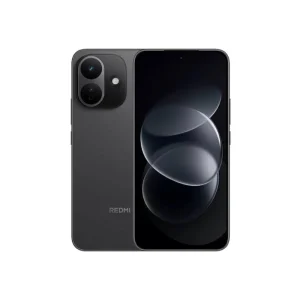
| Design | “Royale” circular camera island, Flat-frame design, Matte finish |
| Colors | Sky Blue, Midnight Black |
| Dimensions | 171.8 x 79.8 x 8.3 mm |
| Weight | 193g |
| Durability | IP52 (dust & splash resistant) |
| Display | 6.88-inch IPS LCD, HD+ (1640 x 720 pixels) |
| Refresh Rate | 120Hz AdaptiveSync |
| Brightness | 600 nits (peak) |
| Protection | TÜV Rheinland (Low Blue Light, Flicker Free, Circadian Friendly) |
| Processor | Unisoc T7250 (Octa-core, 12nm) |
| RAM | 3GB (expandable via virtual RAM up to +3GB) |
| Storage | 64GB eMMC 5.1 (expandable via microSD up to 2TB) |
| Rear Camera | 13MP AI Dual Camera (f/2.2) – HDR, Night Mode |
| Rear Video | 1080p @ 30fps |
| Front Camera | 8MP (f/2.0) – Screen flash, Beautify mode |
| Front Video | 720p @ 30fps |
| Battery | 5200mAh Lithium-Polymer (retains 80% after 1000 cycles) |
| Charging | 15W wired (USB-C), 7.5W reverse wired charging |
| Biometrics | Side-mounted fingerprint sensor, AI Face Unlock |
| Audio | 3.5mm headphone jack, FM Radio |
| Connectivity | Wi-Fi 802.11 b/g/n, Bluetooth 5.0, USB-C 2.0, GPS |
| Missing Features | No NFC, No 5G, No Wireless Charging |
| Software (Global) | Android 15 (Go Edition) – 2 OS updates, 4 years security patches |
KSh 14,000.00
In late April 2026, Xiaomi’s sub-brand Redmi refreshed its entry-level lineup with the launch of the Redmi A7 4G. Positioned as a successor to the Redmi A5, this device arrives in a highly competitive budget segment where users demand durability, long battery life, and smooth visuals without breaking the bank. Marketed under the tagline “The No Tension Smartphone,” the Redmi A7 aims to eliminate common user anxieties regarding battery drainage, display lag, and structural fragility .https://sammertechnology.co.ke/
The Redmi A7 bridges the gap between basic feature phones and expensive flagships by offering premium design cues—such as a “Royale” camera island—combined with utilitarian internals. It specifically targets first-time smartphone users, students, and those seeking a reliable secondary device, particularly in price-sensitive markets like India, Nepal, and Kenya .
This description provides a comprehensive deep dive into the specifications, performance metrics, design philosophy, and market positioning of the Redmi A7, based on official Xiaomi data and early technical reviews.
2. Design and Build Quality: Premium Looks, Practical Durability
The “Royale” Aesthetic
The most striking visual element of the Redmi A7 is its rear camera module. Xiaomi has moved away from traditional vertical or square camera arrangements in favor of a large, circular “Royale” island . This design choice, reminiscent of much higher-end flagship smartphones, gives the A7 a distinctive look that belies its budget price tag. The device features a clean, minimalist flat-frame design that tapers slightly at the edges for a comfortable in-hand feel.
Available in two primary colorways—Sky Blue and Midnight Black—the phone utilizes a matte finish on the back panel. This finish is practical for an entry-level device, as it resists fingerprint smudges better than glossy alternatives and provides a non-slip grip.
Dimensions and Ergonomics
Despite its large screen, the Redmi A7 maintains a relatively slim profile. It measures 171.79mm in height, 79.77mm in width, and is just 8.26mm thick, weighing approximately 193 grams . The weight distribution is balanced, preventing it from feeling overly heavy in the pocket while still providing a substantial, durable feel.
Durability and Testing
A key selling point for the A7 is its rugged construction. Xiaomi claims the device has undergone rigorous internal testing to ensure longevity:
-
210,000 Power Button Tests: Simulating years of locking and unlocking.
-
28,000 Micro Drop Tests: Ensuring the structure holds up against accidental bumps.
-
10,000 Charging Port Tests: Reinforcing the USB-C port against wear and tear.
-
IP52 Rating: The device offers dust and splash resistance. While it is not waterproof (it shouldn’t be submerged), it can handle light rain or accidental splashes from a sink .
3. Display: Large, Fluid, and Eye-Friendly
Technical Specifications
The Redmi A7 features a massive 6.88-inch IPS LCD panel. While the resolution is capped at HD+ (1640 x 720 pixels), resulting in a pixel density of roughly 260 ppi, the focus here is on size and smoothness rather than pixel-peeping sharpness .
The 120Hz Experience
The standout feature of the display is its 120Hz AdaptiveSync refresh rate. In the budget category, 60Hz or 90Hz is the norm; a 120Hz panel at this price point is a notable upgrade. The “AdaptiveSync” functionality means the phone intelligently switches between refresh rates (e.g., dropping to 60Hz for static reading to save battery, and ramping up to 120Hz for social media scrolling or compatible games) to balance fluidity with power efficiency .
With a peak brightness of 600 nits, the display remains legible outdoors under direct sunlight, though visibility is not as strong as flagship AMOLED panels, it is sufficient for the segment .
Eye Care Certifications
Understanding that budget phones are often used for extended media consumption, Xiaomi has equipped the A7 with Triple TÜV Rheinland certifications:
-
Low Blue Light (Software Solution): Reduces harmful blue light emissions to prevent eye strain.
-
Flicker Free: Eliminates screen flickering at low brightness levels.
-
Circadian Friendly: Adjusts the display warmth to support the user’s natural sleep cycle .
Wet Touch Technology
A practical addition for users in humid climates or those who like to use their phones while cooking, the Redmi A7 supports “Wet Touch Technology.” This allows the touchscreen to remain responsive even when the screen or the user’s fingers are wet, ensuring you can still answer a call or pause a video with raindrops on the screen .
4. Performance: Optimized for Everyday Efficiency
Processor and Hardware
Under the hood, the Redmi A7 is powered by the Unisoc T7250 octa-core processor (also referenced as the Tiger T615). This chipset is built on a 12nm process and features a dual-cluster architecture: two Cortex-A75 cores clocked at up to 1.8GHz for performance tasks, and six Cortex-A55 cores for efficiency . While it is not designed for high-end gaming (like Genshin Impact), it is perfectly capable of handling:
-
Social media scrolling (WhatsApp, Facebook, Instagram).
-
Video playback (YouTube, Netflix).
-
Lightweight gaming (Candy Crush, Ludo, 8 Ball Pool).
In AnTuTu benchmarking (v10/v11), the device scores approximately 362,730 points, placing it firmly in the entry-level performance tier .
Memory Configurations
The base model—and the most widely available—includes 3GB of LPDDR4X RAM and 64GB of eMMC 5.1 storage. Some regions may offer a 4GB RAM variant, though the standard global release primarily focuses on the 3GB/64GB configuration .
To aid multitasking, Xiaomi includes a Memory Extension feature. This allows the phone to convert up to 3GB of the internal storage into virtual RAM, theoretically allowing the 3GB model to function like a 6GB model under moderate load .
Software: Android 15 Go Edition vs. HyperOS
Here we see a bifurcation based on region:
-
Global Variants: To ensure smooth performance on the 3GB RAM hardware, many global versions of the Redmi A7 run Android 15 (Go Edition) . Android Go is a stripped-down version of Android optimized for low-RAM devices, utilizing lighter-weight apps (like YouTube Go and Gallery Go) that launch faster and consume less storage .
-
Indian/Other Variants: There are reports suggesting the Indian variant features a custom HyperOS skin based on Android 16, though the underlying lightweight optimization remains similar .
Despite the software differences, Xiaomi promises a “36-month like-new software experience” , utilizing aging tests to ensure the device remains responsive after three years of use. The update policy includes 2 years of OS updates and 4 years of security patches, which is generous for the budget segment .
5. Camera System: Simple and Reliable
The Redmi A7 does not attempt to compete with flagship photography; instead, it focuses on consistency and ease of use for social media sharing.
Rear Camera
The main shooter is a 13MP AI Dual Camera (Primary sensor with an f/2.2 aperture). Xiaomi has tuned this sensor to increase light intake by 13% compared to its predecessor, the Redmi A5 .
-
Features: The camera software includes HDR+ to balance shadows and highlights, Night Mode for low-light scenarios (using software processing to brighten dark scenes), and various AI filters.
-
Video Recording: The rear camera caps out at 1080p (Full HD) at 30 frames per second. It does not support 4K recording .
Front Camera
For selfies and video calls, the device houses an 8MP sensor (f/2.0 aperture) housed in a waterdrop-style notch. It supports Beautify modes to smooth skin tones and a screen-based soft-light flash for taking selfies in the dark.
While the camera lacks an ultra-wide lens or telephoto zoom, the 13MP sensor is generally competent for scanning documents, capturing quick “point-and-shoot” moments in good lighting, and sharing on Instagram or WhatsApp.
6. Battery Life and Charging: The Endurance Champion
Massive Capacity
The crown jewel of the Redmi A7 is its 5200mAh lithium-polymer battery (typical value). In an era where some flagship phones still hover around 4500mAh-5000mAh, this capacity provides substantial endurance.
-
Video Playback: Up to 19 hours.
-
Music Playback: Up to 78 hours.
-
Mixed Usage: Rated for approximately 1.78 days (light to moderate usage) .
This capacity ensures that even a “heavy” user will end the day with charge left, while a light user may go two full days without seeing a charger.
Charging Specifications
-
Wired Charging: The device supports 15W Quick Charging via the USB Type-C port. The box includes a 15W charger. This speed is adequate for the massive battery, taking roughly 2 to 2.5 hours for a full top-up .
-
Reverse Wired Charging: A unique feature for this segment is 7.5W Reverse Wired Charging. Using an OTG cable, the user can use the Redmi A7 as a portable power bank to charge smartwatches, wireless earbuds, or a friend’s phone .
Longevity
Xiaomi claims that the battery retains 80% of its original capacity after 1000 charging cycles, which is better than the industry standard (often 500-800 cycles). This suggests the battery will remain healthy for roughly three years of daily charging .
7. Connectivity and Extras
Network and Ports
-
Cellular: 4G LTE (Dual SIM support with Dual Standby). Note: Despite the numerical naming “A7,” this is strictly a 4G device; it does not support 5G networks .
-
Audio: Retains the beloved 3.5mm headphone jack and features an FM Radio receiver (requires wired headphones as an antenna).
-
Charging/Data: USB Type-C port (USB 2.0).
-
Expandable Storage: Dedicated microSD card slot supporting cards up to 2TB, allowing users to store large media libraries locally.
Biometrics
Security is handled via a side-mounted fingerprint sensor embedded in the power button. This placement is ergonomic and unlocks the phone instantly as you pick it up. Additionally, AI Face Unlock is available as a secondary method, though it is less secure than the fingerprint scanner .
Missing Features
Potential buyers should be aware of what is not included. The Redmi A7 does not feature an NFC chip (meaning no Google Pay tap-to-pay) and does not support 5G connectivity or wireless charging .
8. Pricing and Market Positioning (India Focus)
The Redmi A7 launched in India with aggressive pricing to combat rivals from Realme and Samsung.
-
Launch Price (India):
-
3GB RAM + 64GB Storage: ₹10,999 (Official Launch Price).
-
First Sale Effective Price: ₹10,499 (Including bank offers/discounts).
-
-
Comparison with A7 Pro:
-
The standard A7 (₹10,499) sits below the Redmi A7 Pro, which offers a larger 6300mAh battery and slightly better build quality for roughly ₹11,499 .
-
9. Conclusion: Who is the Redmi A7 for?
The Redmi A7 is not a tech enthusiast’s dream; it is a pragmatist’s tool. It makes very clear trade-offs: an HD+ screen instead of FHD, a Unisoc chip instead of Snapdragon, and a basic camera setup.
However, within those constraints, it excels at its specific mission.
Pros:
-
Excellent Battery Life: The 5200mAh cell combined with the low-power screen makes it a multi-day device.
-
Smooth Display: 120Hz refresh rate at this price is rare and provides a premium scrolling experience.
-
Durable Build: Slim design backed by robust testing and IP52 rating.
-
Headphone Jack: A dying breed, very welcome here.
Cons:
-
No 5G: As networks expand, this phone lacks future-proofing in connectivity.
-
Low Resolution: The 720p screen is noticeably less sharp than 1080p panels for text reading.
-
Limited Gaming: Heavy 3D gaming will result in frame drops.
-
No NFC: Excludes users who rely on contactless payments.
Based on 0 reviews
Be the first to review “REDMI A7”
Related products
-
Xiaomi
Xiaomi Redmi Note 14
Feature Category Specification Display 6.67-inch AMOLED, 120Hz refresh rate Processor Mediatek Helio G99 Ultra (6 nm) Operating System Android 14, HyperOS Memory (RAM) 6GB / 8GB Internal Storage 128GB / 256GB Camera System Rear: 108 MP + 8 MP + 2 MP
Front: 20 MPBattery & Charging 5500 mAh, 33W fast charging Connectivity Dual SIM, 3G, 4G, Wi-Fi Colors Midnight Black, Mist Green, Ocean Blue, Lime Green KSH 20000-24000
SKU: n/a -
Xiaomi
REDMI NOTE 15
Specification Redmi Note 15 5G Processor (SoC) Snapdragon 6 Gen 3 (4nm) Network 5G supported Battery & Charging 5520mAh with 45W turbo charging Durability IP66 dust/water resistance Ultra-Wide Camera 8MP RAM/Storage (Common) 8GB+128GB / 8GB+256GB (expandable) ksh 28500-32500
SKU: n/a -
Xiaomi
REDMI A3X
Feature Category Specification Display 6.71-inch IPS LCD, 500 nits brightness Processor Unisoc T603 (22 nm) Operating System Android 14 (MIUI) Memory 3GB / 4GB RAM Storage 64GB / 128GB internal, expandable via microSD card Camera System Rear: 8MP + 0.08MP
Front: 5MPBattery & Charging 5000 mAh, 10W charging Connectivity Dual SIM, 4G, Wi-Fi, Bluetooth, GPS Ports USB Type-C, 3.5mm audio jack Colors Midnight Black, Moonlight White, Aurora Green KSH 10000-12500
SKU: n/a



There are no reviews yet.